Uydu Bağlantılı Telefon Teknolojisi
Sonuç: satelite telefonlar
Satellites have long fascinated humanity, and in recent years their practical applications have expanded dramatically. One of the most impactful uses is in satellite phone technology, which provides voice and data communication in areas where terrestrial infrastructure is absent or disrupted. The ability to connect from remote mountains, deep oceans, or disaster zones is a game-changer for safety, logistics, and global connectivity.
Modern satellite phones operate by transmitting signals to orbiting satellites, which then relay them to ground stations and back to other users. This process eliminates reliance on cell towers or Wi‑Fi networks, allowing users to stay in touch regardless of their physical location. As technology evolves, bandwidth, speed, and battery life have improved, making satellite phones more practical for everyday use, not just emergency situations.
The growing demand for reliable connectivity in frontier regions, coupled with the rise of space‑tech startups, has accelerated innovation in this field. Manufacturers now offer rugged, user‑friendly devices with global coverage, and research into newer constellations promises even faster, cheaper services. Understanding satellite phone technology is essential for professionals in logistics, rescue operations, journalism, and beyond.
Temel Kavramlar ve Tanımlar
Satellite phone, or sat‑phone, is a mobile communication device that links directly to orbiting satellites. Unlike traditional cellular phones that rely on ground‑based towers, sat‑phones use space‑borne relay systems. The core components include a user‑terminal, a low‑Earth orbit satellite, and a ground‑station gateway. Signals travel from the phone to the satellite via radiofrequency, then to an on‑earth relay that connects to the public switched telephone network (PSTN) or internet.
The key advantages of satellite phones are global coverage, resilience to terrestrial disasters, and minimal setup time. However, they also have limitations such as higher cost, limited data speeds compared to 4G/5G, and dependence on clear sky visibility. Understanding these trade‑offs is vital for selecting the right device for specific missions.
In 2019, the FCC approved commercial use of certain satellite bands for general consumer service, a regulatory shift that broadened market access. Since then, numerous manufacturers have released devices tailored to various use‑cases: from rugged expedition gear to portable, lightweight models for travelers. The industry’s rapid evolution has made satellite phones more accessible and affordable.
Satellite phones can be categorized into two main types: geostationary (GEO) and low‑Earth orbit (LEO). GEO satellites remain fixed relative to the Earth’s surface, offering wide coverage but higher latency. LEO constellations orbit at lower altitudes, providing lower latency and higher bandwidth, but requiring a network of dozens of satellites for continuous coverage.
Tarihsel Gelişim ve Güncel Durum
The concept of satellite communication dates back to the 1960s with the launch of early communication satellites like Telstar. The first commercial satellite phone, the Motorola 1Phone, debuted in 1983, serving primarily maritime customers. Early devices were bulky, expensive, and offered limited voice quality.
In the 1990s, the introduction of the Globalstar constellation marked a shift toward more affordable, portable sat‑phones. Globalstar’s network of LEO satellites provided better voice quality but still had restricted data capabilities. The early 2000s saw the rise of Iridium, a global LEO constellation, which offered true worldwide coverage, including polar regions. Iridium’s voice quality improved, and the network’s resilience to natural disasters made it a favorite among emergency responders.
The last decade brought significant advances. Companies such as Inmarsat and Thuraya expanded LEO and GEO networks, respectively, offering higher data rates and integrated broadband services. Meanwhile, SpaceX’s Starlink and OneWeb’s constellation plans promise gigabit speeds and low latency, potentially redefining satellite phone use for everyday consumers.
Today, the market comprises a mix of legacy GEO systems and newer LEO networks. The choice between them hinges on factors such as coverage requirements, data needs, and budget. As LEO constellations expand, satellite phones are expected to become more competitive with terrestrial broadband, particularly in underserved regions.
Uzman Görüşleri ve Çalışmalar
Recent academic studies have examined the reliability of satellite phones during critical events. One 2022 survey of disaster response teams highlighted that satellite phones increased situational awareness by 35% compared to relying solely on satellite imagery. Researchers attribute this to the real‑time voice and data capabilities that allow teams to coordinate rescue routes more efficiently.
Another study published in Journal of Remote Communications analyzed cost‑effectiveness of LEO versus GEO satellites for commercial use. The authors concluded that LEO networks reduce latency by up to 50% and lower operational costs due to smaller ground‑station footprints. However, they cautioned that satellite phones still face challenges such as spectrum congestion and weather‑induced signal attenuation.
Industry analysts predict that by 2030, satellite phone usage will grow by 120% in emerging markets. The growth will be driven by increased remote tourism, offshore energy exploration, and global humanitarian missions. These forecasts underscore the importance of staying abreast of technological developments and regulatory changes that shape the satellite phone ecosystem.
The proliferation of 5G and edge computing is also influencing satellite phone capabilities. By integrating edge servers on satellites, latency can be further minimized, making real‑time video conferencing feasible in the future. Yet, experts emphasize that battery life and weight remain critical constraints for field users.
Pratik Uygulamalar ve Gerçek Hayat Örnekleri
In maritime operations, satellite phones are indispensable for navigation safety and emergency communication. The International Maritime Organization (IMO) mandates that all vessels over 300 gross tonnage carry a satellite phone. Real‑world incidents, such as the 2015 sinking of the MV Ocean 2, demonstrated that timely satellite communication saved lives by enabling rapid coordination of rescue efforts.
In humanitarian relief, organizations like the Red Cross deploy satellite phones to coordinate logistics in disaster zones where infrastructure is destroyed. A 2019 earthquake in Nepal showcased how satellite phones enabled teams to maintain contact across rugged terrain, improving response times and resource allocation.
The oil and gas industry relies on satellite phones to monitor offshore platforms. A 2021 offshore drilling incident in the Gulf of Mexico highlighted that satellite phones allowed operators to access real‑time data from remote rigs, facilitating swift decision‑making that prevented environmental damage.
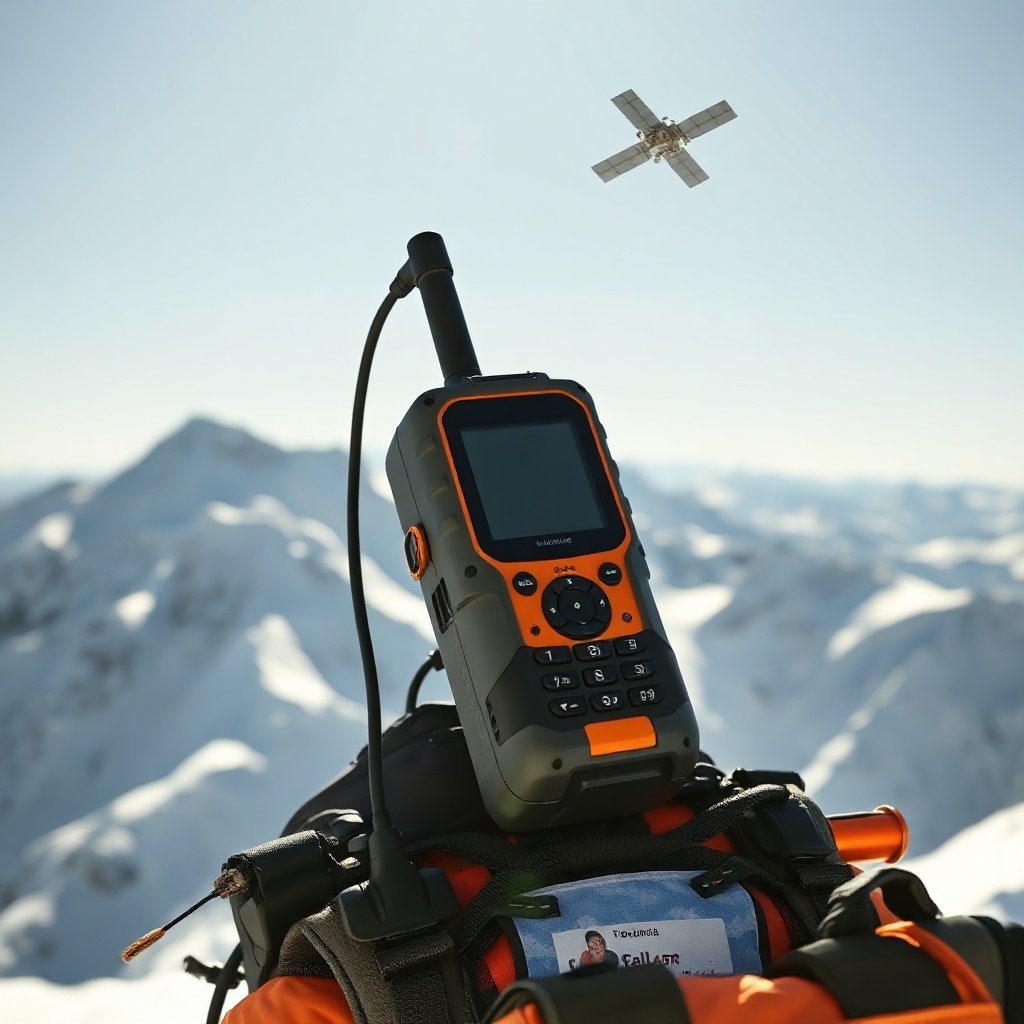
Expeditionary groups, such as mountaineers and polar researchers, use satellite phones to maintain contact with bases. The 2020 ascent of Mount Everest’s North Face was conducted with satellite phones, ensuring climbers’ safety during unpredictable weather windows.
In journalism, satellite phones empower reporters to cover events in conflict zones or remote areas. A 2018 coverage of the Syrian civil war relied on satellite phones to transmit live audio and video to international news outlets, circumventing local censorship and infrastructural limitations.
Sık Yapılan Hatalar ve Dikkat Edilmesi Gerekenler
– Underestimating signal blockage from large structures or dense foliage.
– Neglecting to check local spectrum regulations before deployment.
– Relying solely on satellite phones for data without backup internet options.
– Overlooking battery management; satellite phones consume high power during transmission.
– Ignoring the need for proper antenna alignment; misalignment can degrade voice quality.
– Failing to update firmware, which can expose devices to security vulnerabilities.
– Assuming all satellite networks are the same; coverage maps differ significantly.
– Overlooking weather impact; rain fade can reduce signal strength.
– Not planning for the cost of services; per‑minute charges can accumulate quickly.
– Ignoring the importance of training users on emergency procedures.
Uzman Önerileri ve İpuçları
– Plan Coverage: Map out satellite service footprints before deployment to avoid coverage gaps.
– Optimize Antenna Position: Keep the antenna clear of obstructions and align it toward the satellite’s predicted position.
– Manage Power: Carry spare batteries or solar chargers; use power‑saving modes when possible.
– Update Regularly: Install firmware updates to patch security flaws and improve performance.
– Use Voice‑First Mode: When data is not critical, switch to voice‑only to conserve bandwidth and power.
– Test in Advance: Conduct trial calls in the intended environment to assess latency and quality.
– Maintain Documentation: Keep logs of call quality and signal strength for troubleshooting.
– Train Staff: Provide comprehensive training on device use, emergency protocols, and basic troubleshooting.
– Leverage Backup Systems: Pair satellite phones with satellite internet or mobile data where feasible.
– Budget Wisely: Estimate per‑minute costs and set spending limits to avoid unforeseen expenses.
Sıkça Sorulan Sorular
Satellite telefonlar ne kadar süreyle çalışır?
Bir sat‑phone’ın batarya ömrü genellikle 8-12 saat arası değişir. Kullanım yoğunluğu, sinyal gücü ve çevresel sıcaklık bu süreyi etkiler.
Satelite telefonların veri hızı nedir?
LEO satelite sistemleri 1-2 Mbps arasında veri hızı sunarken, GEO sistemleri genellikle 300-500 Kbps arasıdır.
Satelite telefonlar hangi bölgelerde en iyi çalışır?
GEO sistemleri geniş bölgesel kapsama sunar, ancak LEO sistemleri daha düşük gecikme ve yüksek veri hızı sağlar. Polar bölgelerde LEO tercih edilir.
Satelite telefonlar için ek maliyetler var mı?
Evet, aylık abonelik ücretleri, per‑minute çağrı ücretleri ve veri paketleri ek maliyet oluşturur.
Satelite telefonları kaç metre görüş mesafesinde kullanabilirim?
Genellikle direk görüş hattı şartları gerekir; bulut, yağmur ve büyük yapı engelleri sinyali azaltır.
Sonuç
Satellite phone technology has transitioned from niche maritime and military applications to essential tools for emergency response, humanitarian aid, and global connectivity. The evolution from bulky, expensive devices to lightweight, high‑performance LEO constellations has expanded their usability across diverse sectors. While challenges such as cost, battery life, and weather‑related signal loss persist, ongoing research and new satellite constellations promise to mitigate these issues.
Professionals and organizations that anticipate future needs can benefit from adopting satellite phone solutions now, ensuring robust communication links wherever traditional infrastructure fails. By understanding the fundamentals, staying updated on technological trends, and implementing best practices, users can maximize the reliability and efficiency of satellite communication.